
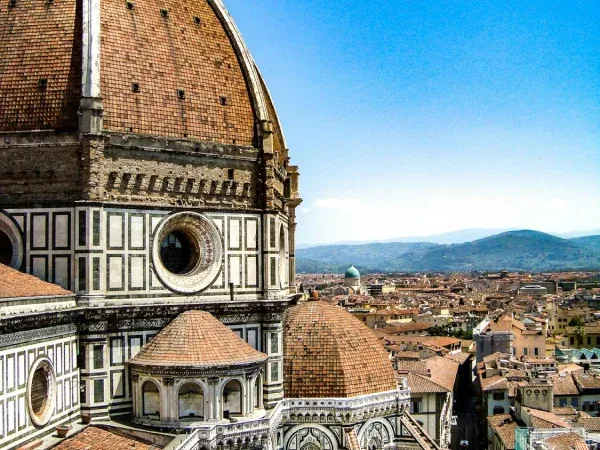
Duomo Florence Complex
Discover detailed information about the Duomo of Florence complex, including its buildings and parts. Learn about the history, architecture, and key highlights of this iconic landmark.
Support when you need it
Customer service to help you with all your needs from 8:00 to 19:00.
Fast and online booking
Choose the best option for your needs and preferences and avoid the lines.
Top attraction in Florence
Discover the city’s most famous cathedral and step into centuries of Renaissance history.
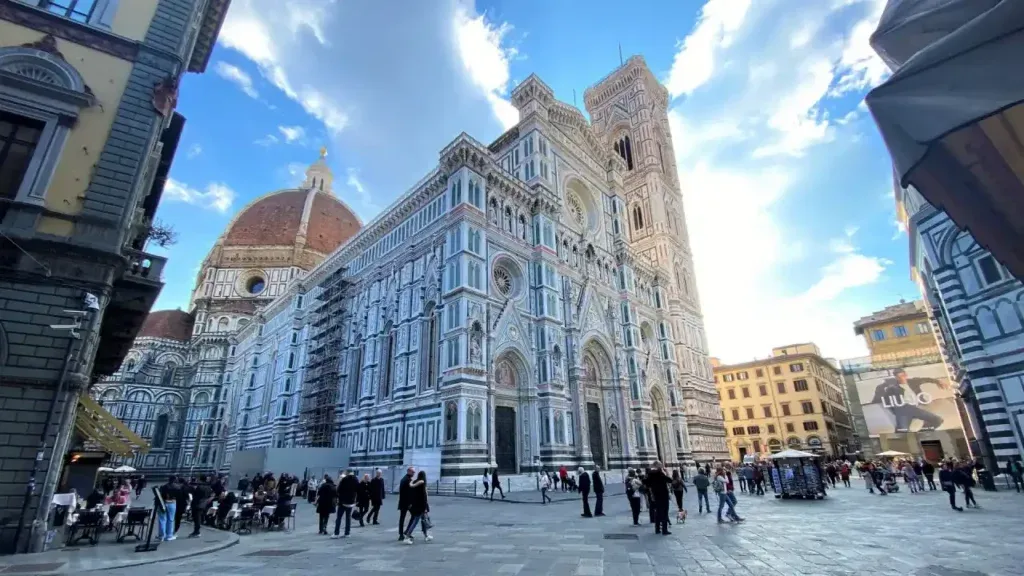
Cathedral of Santa Maria del Fiore
Construction of the cathedral began in 1296 under the direction of Arnolfo di Cambio to replace the church of Santa Reparata. The project was funded by the Florentine Republic and the silk and wool guilds, utilizing a facade composed of white, green, and pink marble from Carrara, Prato, and Maremma.
Interior
The interior was built to accommodate a capacity of 30,000 people. The architectural layout follows a Latin cross plan with a nave and transept, utilizing mathematical principles and proportions. Throughout its 140-year development, the building integrated Gothic and Renaissance elements.
While the exterior features reliefs and statues depicting biblical figures, the interior maintains a focus toward the high altar and the stained glass windows. The building functioned as a civic and spiritual center.
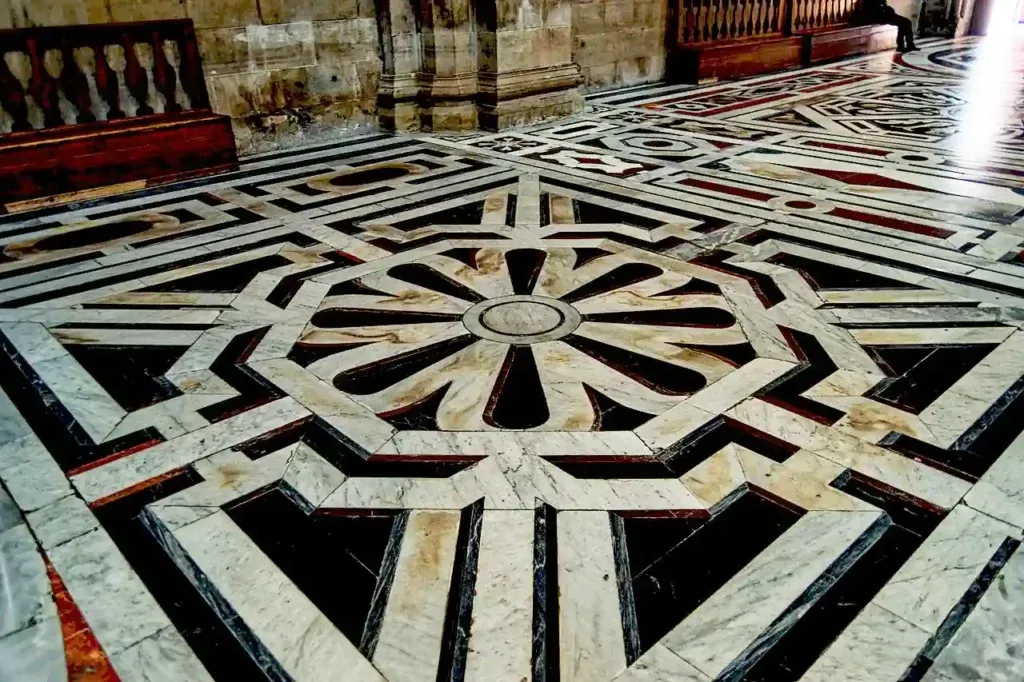
The floor of the Cathedral
The interior floor of the Duomo consists of a marble mosaic pavement started in the 16th century. This work uses the same color palette as the exterior—white, green, and red marble—arranged in complex geometric patterns.
Designed by artists such as Baccio d’Agnolo and Francesco da Sangallo, the floor covers the entire nave and serves to organize the internal space. The maintenance of these mosaics is a continuous task for the Opera del Duomo, as the wear from visitors requires periodic restoration to preserve the symmetry and color of the stone.
Photo: “Firenze, Florence, Cattedrale Santa Maria del Fiore. View on one of the 3D floor patterns in multi-coloured marble in the Southern Side-Nave I” by Txllxt_TxllxT.
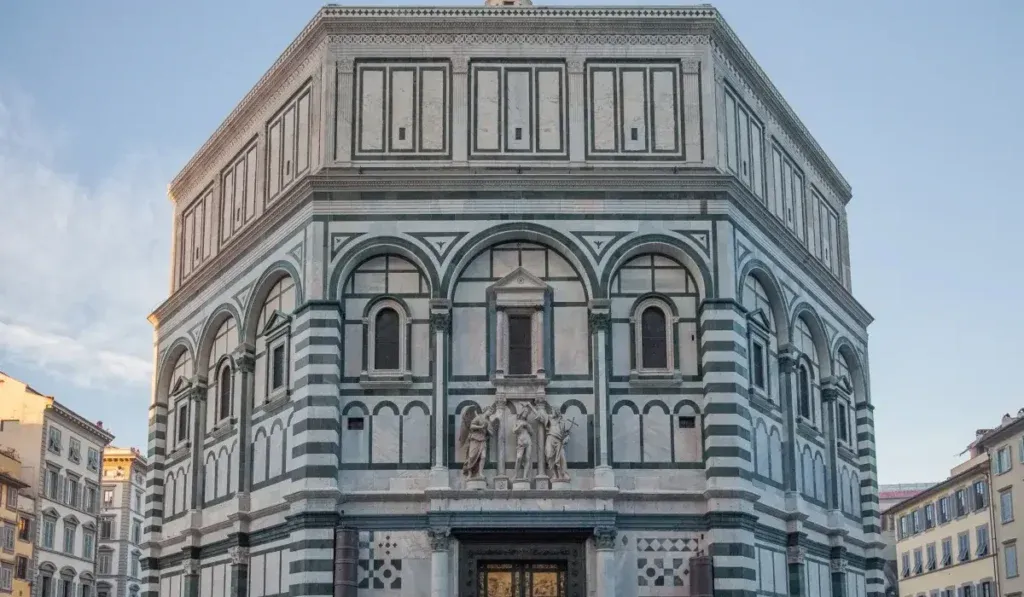
Baptistery of St. John
Across from the cathedral stands the Duomo Florence Baptistery of St. John (Battistero di San Giovanni). Its bronze doors, known as the Gates of Paradise, depict biblical scenes. It’s where Dante Alighieri was baptized—a connection to the great poet’s life. As you stand within its octagonal walls, imagine the echoes of centuries past.
Photo: “Baptistery, Florence” by Ham II.
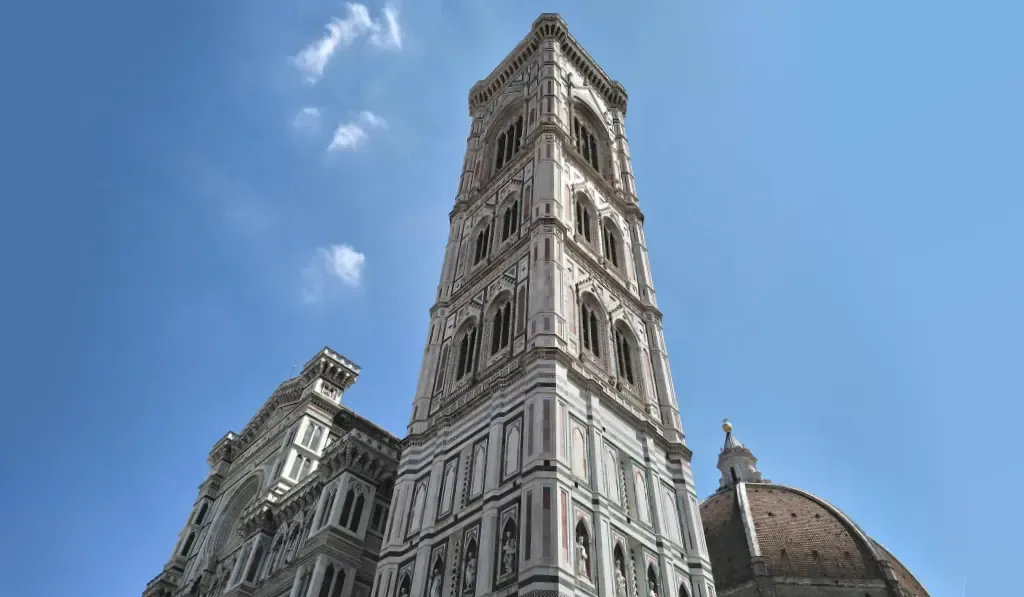
Giotto’s Bell Tower Florence
Adjacent to the cathedral stands Giotto’s Campanile, a freestanding bell tower. Its elegant Gothic design complements the Duomo perfectly. Rising to an impressive 84.7 meters (278 feet), it offers a different perspective—one that captures the city’s rooftops and the rolling Tuscan hills. Climb the 414 steps, and you’ll feel the heartbeat of the Duomo Florence bell tower.
Campanile di Giotto, as it is known in Italian, graces the Piazza del Duomo in Florence, Italy. This iconic medieval bell tower stands as a masterpiece of Italian Gothic architecture, showcasing Florence’s rich artistic and cultural heritage.
Opera del Duomo Museum
The Opera del Duomo Museum houses the original artworks and structural components removed from the Florence Cathedral, the Baptistery, and the Bell Tower. The galleries contain the door panels created by Lorenzo Ghiberti for the Baptistery and the marble cantorie sculpted by Luca della Robbia and Donatello. A dedicated hall displays the statues that occupied the niches of the facade, while another section features the tools and models used during the construction of the dome. Visitors find the Pietà by Michelangelo within the collection, alongside a reconstruction of the medieval facade of the monument.
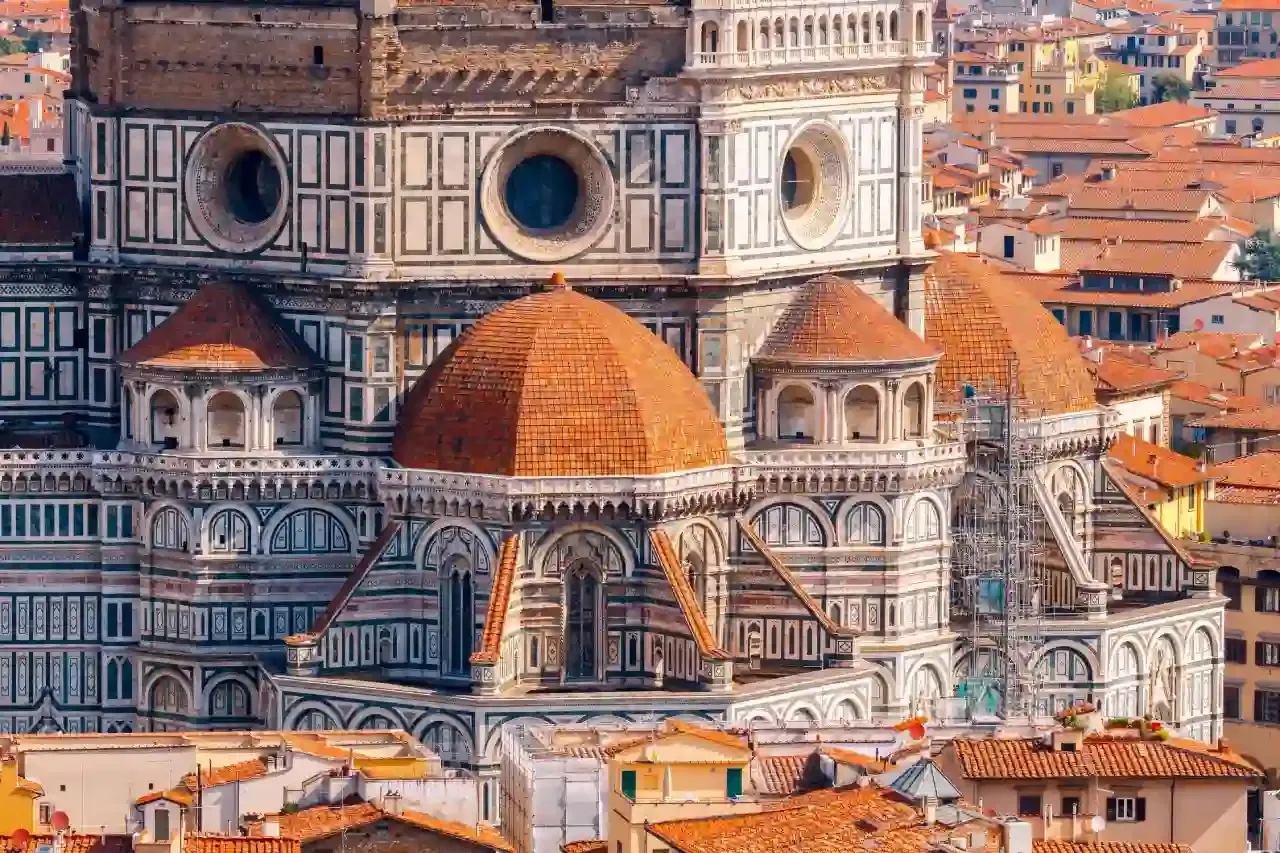
The Florence Duomo terraces
You can access the Florence Duomo Terraces to observe the exterior architecture of the cathedral from an elevated position. As you walk along the stone galleries, you see the marble carvings and structural components at a close distance.
This vantage point provides you with a view of the urban landscape, including the terracotta rooftops and the surrounding hills. By reaching this area, you examine the upper masonry of the building and gain a perspective on the geometric patterns of the facade that is not available from the ground level.
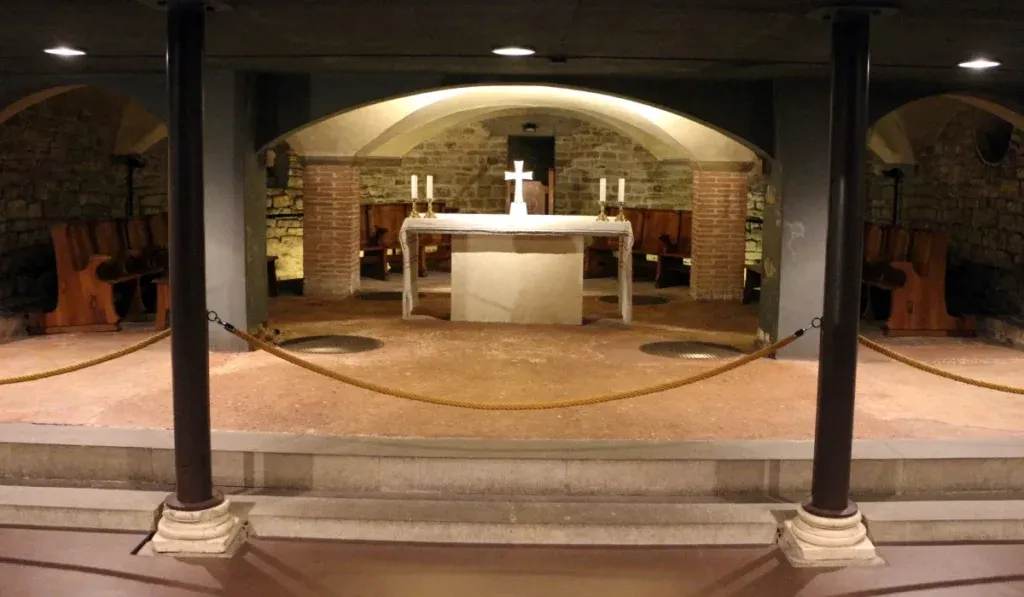
Basilica of Santa Reparata
Beneath the current cathedral lies the remains of the Basilica of Santa Reparata, the predecessor to the Duomo. Archaeological excavations reveal ancient mosaics, tombs, and foundations. It’s a silent witness to centuries of devotion and transformation. As you explore, consider the continuity of faith—a thread that binds generations across time.
Photo: “Excavations of Santa Reparata beneath the Florence Cathedral” by Sailko.